
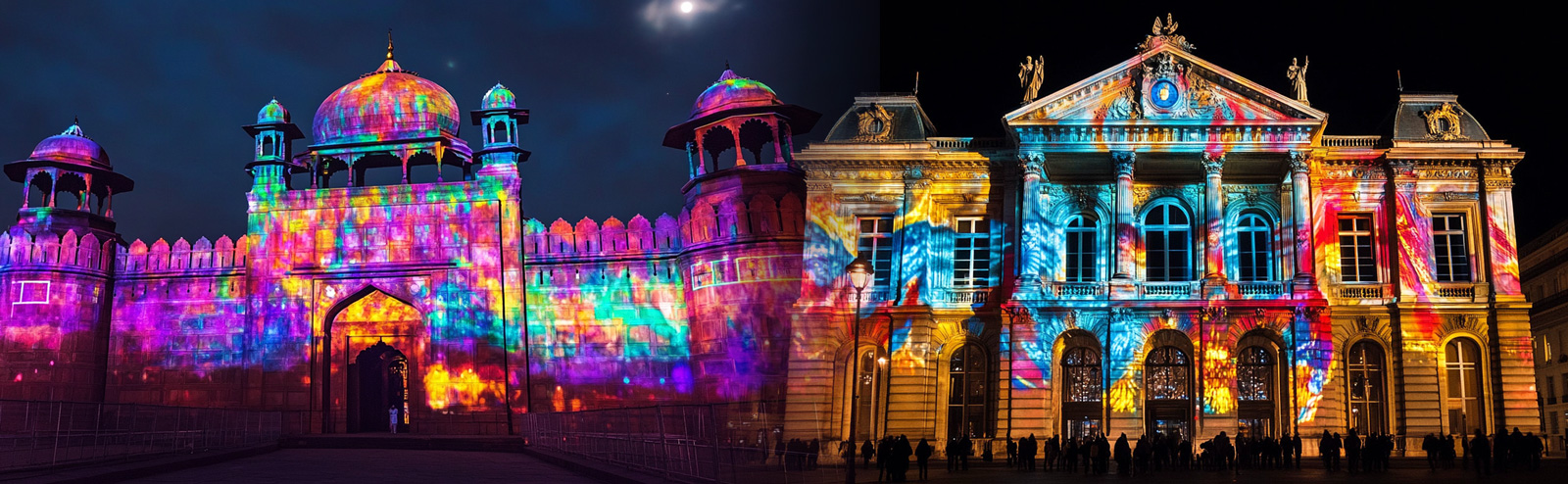
Tourism experiences across the world are evolving rapidly. Visitors today expect more than static monuments and traditional guided tours, they seek immersive, visually engaging, and memorable experiences.
This is where 3D projection mapping is transforming the tourism industry.
By turning monuments, heritage buildings, and public spaces into dynamic storytelling platforms, 3D mapping for tourism enables destinations to attract more visitors, extend engagement hours, and create unforgettable cultural experiences.
From historic forts and temples to city landmarks and museums, heritage projection mapping is redefining how history is presented to modern audiences.
Companies specialising in immersive visual technologies, such as 3D Mapping India, are helping tourism boards, cultural organisations, and event authorities transform heritage sites into powerful storytelling canvases through large-scale projection mapping shows.
In this blog, we explore the top 10 uses of 3D mapping for tourism and heritage sites and how it is enhancing visitor engagement around the world.
3D projection mapping is a visual technology that projects high-resolution digital content onto physical surfaces such as monuments, buildings, and landscapes.
Unlike traditional projection systems, monument projection mapping aligns visuals precisely with the architectural contours of a structure, creating the illusion that the building is moving, transforming, or narrating stories through light and animation.
For tourism authorities and heritage sites, this technology enables:
With advancements in creative design and projection technology, 3D mapping for tourism has become a powerful medium for bringing heritage to life.
One of the most powerful uses of heritage projection mapping is bringing historical stories to life.
Instead of relying solely on plaques or audio guides, projection mapping allows monuments to visually narrate their own history.
For example, a heritage fort or palace can recreate:
Through animation, narration, and synchronised sound, visitors experience history in a cinematic format.
Specialised projection mapping companies like 3D Mapping India work closely with historians, designers, and creative teams to ensure that such visual storytelling remains authentic while delivering a spectacular viewing experience.
Many heritage sites traditionally close at sunset, limiting their tourism potential.
3D mapping for tourism allows monuments to become vibrant night-time attractions, extending visitor hours and increasing tourism revenue.
Projection mapping shows can turn historic landmarks into evening spectacles, drawing tourists long after daylight hours.
Key benefits include:
Cities and tourism boards across the world are increasingly adopting monument projection mapping shows as signature night tourism experiences.
Cultural festivals are important opportunities for tourism promotion and heritage celebration.
Heritage projection mapping can transform monuments into stunning visual stages, showcasing stories about regional traditions, mythology, and cultural heritage.
Projection mapping shows can highlight:
Creative teams and projection mapping specialists such as 3D Mapping India design custom visual content that blends local storytelling with modern digital artistry.
Communicating the importance of heritage preservation to modern audiences is often challenging.
Projection mapping helps bridge this gap by presenting historical narratives in engaging and visually immersive formats.
Through monument projection mapping, visitors can learn about:
This approach encourages deeper appreciation for heritage conservation while making historical information more accessible.
Many heritage destinations host traditional light and sound shows, but projection mapping takes these experiences to an entirely new level.
Instead of static lighting effects, 3D projection mapping allows monuments to visually transform through animated storytelling.
Advanced projection technology can create:
With the right combination of creative design and technical precision, companies like 3D Mapping India help heritage sites develop large-scale projection shows that captivate audiences.
Tourism boards continuously seek innovative ways to promote destinations and attract visitors.
3D mapping for tourism promotion enables cities and heritage destinations to showcase their identity through immersive visual experiences.
Projection shows can highlight:
These experiences are highly photogenic and frequently shared across social media platforms, helping destinations gain global visibility.
Projection mapping technology is increasingly integrating interactive elements.
Using sensors and digital interfaces, visitors can interact with projected visuals in real time.
Interactive projection experiences may include:
Such experiences transform heritage tourism from passive viewing into active visitor engagement.
Large-scale celebrations such as national holidays, city festivals, and cultural anniversaries often take place at historic landmarks.
Monument projection mapping is ideal for large public events, transforming heritage structures into vibrant visual displays visible to thousands of spectators.
These shows create memorable experiences for both residents and tourists while generating strong media attention.
Museums and heritage centres are increasingly using projection mapping installations to create immersive exhibition environments.
Through carefully designed visuals, projection mapping can recreate:
These installations help visitors experience history beyond traditional displays.
As destinations adopt smart tourism strategies, digital technologies are becoming integral to visitor engagement.
Projection mapping offers a scalable solution for digital heritage storytelling by enabling:
With minimal physical alterations to monuments, projection mapping allows heritage sites to host evolving shows and narratives over time.
Experts in immersive visual technologies, including 3D Mapping India, continue to develop innovative projection mapping solutions that align with modern tourism strategies.
Tourism today is driven by experiences rather than passive sightseeing.
3D mapping doe tourism and heritage sites allows destinations to:
As immersive technologies evolve, heritage projection mapping will continue to play a major role in shaping the future of tourism experiences.
From historic forts and temples to museums and public landmarks, 3D mapping for tourism and heritage sites enables us to tell their stories in visually powerful ways.
With the right blend of creativity, technology, and historical storytelling, monuments can be transformed into unforgettable experiences for visitors.
Experienced projection mapping specialists such as 3D Mapping India combine technical expertise with creative storytelling to design large-scale visual shows that celebrate history while engaging modern audiences.
To know how we can help bring your idea into life by applying 3D mapping for tourism, contact us.


