
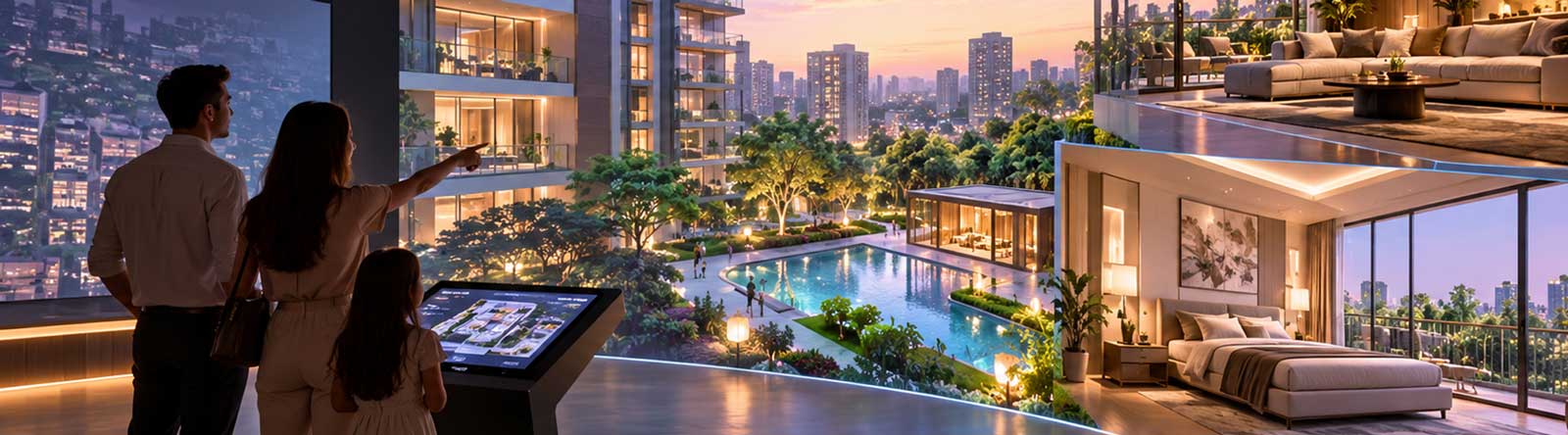
Buying a home is not just about comparing square footage, floor plans and specifications. It is about imagining everyday life in that space, waking up to natural light, walking through a landscaped garden, relaxing in the living room or spending an evening with family on the balcony.
Traditional property visits allow buyers to see a home, but emerging immersive technologies are helping real-estate developers create experiences that engage more than just sight.
From immersive house tours and ambient soundscapes to garden-inspired scents, dynamic lighting and interactive visualisation, sensory experiences are changing how potential buyers experience properties before they are completed. With 3D Mapping India, you get to experience the property before actually buying it or physically being present at the location.
A property showroom traditionally focuses on information. Brochures explain the specifications, scale models show the development and sales teams walk buyers through the project.
But what if a buyer could experience the atmosphere of the property before construction was complete?
Imagine entering a sales experience and being surrounded by the sounds of birds and gentle water, accompanied by the subtle fragrance of fresh greenery. A large immersive screen could transport you into the project’s landscaped garden, followed by a virtual walkthrough of the apartment.
Instead of simply being told what the property will feel like, buyers can experience a carefully designed representation of it.
This is where sensory marketing and immersive technology in real estate can make a difference.
Landscaping is an important part of many residential developments. Gardens, courtyards, walking paths and green spaces can influence how buyers perceive the overall living environment.
However, a brochure or architectural rendering cannot completely communicate the atmosphere of a landscaped space.
An immersive garden experience can combine:
For example, a buyer could virtually walk through the project’s central garden while hearing birdsong and water features and experiencing a subtle fresh-green fragrance.
The objective is not simply to showcase landscaping—it is to communicate the feeling of living in a greener environment.
A conventional house tour follows a physical route: entrance, living room, kitchen, bedrooms, balcony and other spaces.
Technology can extend this experience beyond the limitations of a physical model apartment.
An immersive house tour can allow buyers to explore different spaces digitally and understand how they connect.
A virtual walkthrough could showcase:
Entrance → Living Room → Kitchen → Bedroom → Balcony → Amenities → Outdoor Spaces
Interactive navigation can allow the visitor to move between spaces while visual elements provide additional information about materials, finishes, furniture layouts, views and design features.
This can be particularly useful when the actual apartment is still under construction.
Sound is often overlooked in real-estate presentations.
Yet the acoustic environment can influence how a space is perceived.
A residential project surrounded by landscaped areas might use subtle nature-inspired soundscapes. A premium apartment presentation could use a carefully designed ambient soundtrack. A clubhouse experience could introduce sounds associated with recreation and social spaces.
When combined with visuals, sound can make an immersive walkthrough feel more complete.
The key is subtlety. The soundscape should complement the experience rather than distract from the property itself.
Scent can also be incorporated into carefully designed real-estate experiences.
For example, a garden visualisation could use a mild botanical fragrance, while a luxury living-space experience could use a sophisticated, neutral fragrance.
Different zones within a sales gallery could potentially have different scent profiles that correspond with the environment being presented.
This creates a multisensory experience in which buyers do not simply see a garden or living room—they associate the visual environment with an atmosphere.
However, scent should always be used carefully. Fragrances need to be subtle, comfortable and appropriate for a broad audience, with consideration for visitors who may be sensitive to strong scents.
A property can look and feel completely different depending on the time of day.
Interactive visualisation can allow buyers to experience:
Dynamic lighting and visual content can help communicate these changes within a sales environment.
For properties where views, landscaping or architectural lighting are key selling points, this can add another layer to the presentation.
One of the biggest advantages of immersive real-estate presentation is the ability to move beyond architecture and show how the property can be lived in.
Instead of simply showing an empty apartment, developers can create scenarios around everyday life.
A buyer could experience:
Morning: waking up, opening the curtains and looking out over the landscape.
Afternoon: working from a home office while natural light enters the room.
Evening: relaxing on the balcony while the development lights up.
Weekend: walking through the garden, visiting the clubhouse or spending time with family in recreational areas.
This type of storytelling helps connect architectural features with real-life experiences.
Immersive real estate experiences do not necessarily have to replace physical model apartments or sales galleries.
They can complement them.
A visitor could first explore the development through a large interactive master plan, then enter an immersive house tour, followed by a physical sample apartment or material display.
The experience could connect:
Interactive Master Plan + Immersive Walkthrough + Sensory Design + Physical Materials + Virtual Visualisation
This creates a more complete property presentation.
Different buyers look for different things in a home.
A family may be interested in children’s play areas and gardens. A young professional may focus on connectivity, workspaces and lifestyle amenities. Another buyer may prioritise views, natural light or recreational facilities.
Interactive technology can allow visitors to explore the aspects that matter most to them.
Rather than following one fixed presentation, the experience can become more personalised.
A buyer could select a particular apartment, explore its orientation, enter a virtual walkthrough, visit nearby amenities and experience different views—all through one connected interface.
Real estate has traditionally been marketed through photographs, brochures, floor plans, scale models and physical site visits.
These tools remain important, but technology is creating new possibilities.
An immersive real-estate experience can combine visual, auditory and sensory elements to communicate not just what a property looks like, but what it could feel like to live there.
A garden can become an immersive environment.
A floor plan can become a navigable home.
A house tour can become a virtual journey.
And a sales gallery can become an experience centre.
As real-estate developments become increasingly sophisticated, the way they are presented is evolving too.
Developers can use immersive technology to help buyers understand spaces that do not yet physically exist, visualise different lifestyle possibilities and experience the atmosphere of a future home.
At 3D Mapping India, we create technology-driven experiences that bring real-estate projects to life through immersive visualisation, interactive experiences, virtual walkthroughs and sensory storytelling.
From exploring a future apartment to experiencing its landscaped surroundings, technology can help bridge the gap between imagining a property and experiencing it.
A home is not just walls, rooms and dimensions. It is the experience of living within those spaces.
With immersive technology and sensory storytelling, real-estate developers can give potential buyers a glimpse of that experience—even before the first key is handed over.


