
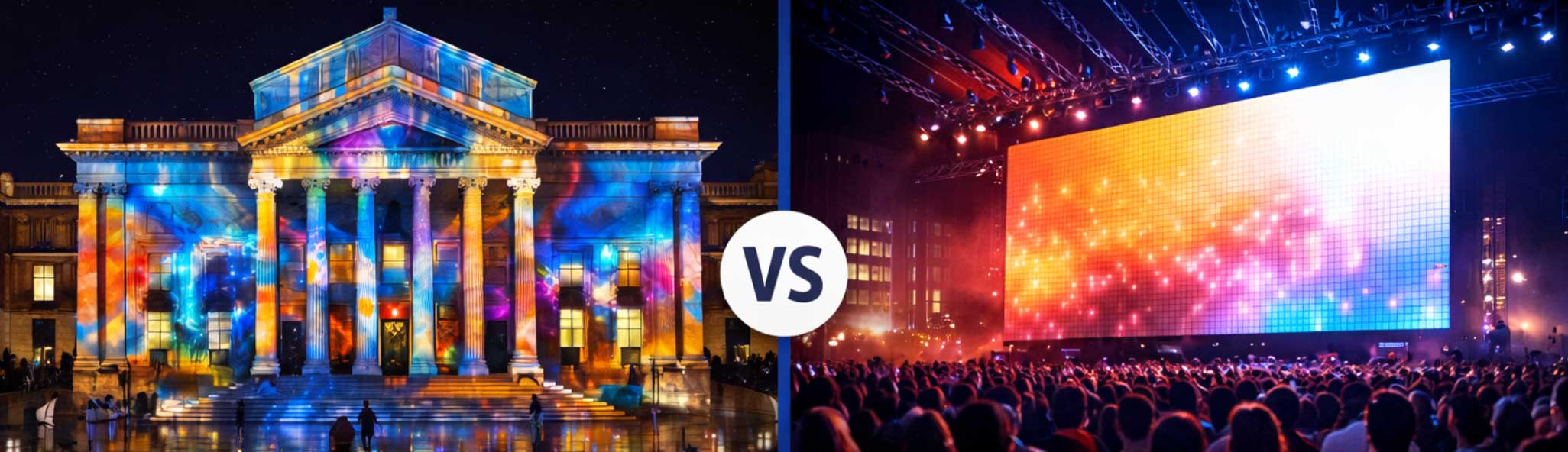
When planning a high-impact event, choosing the right visual medium can define how your audience experiences your brand. The debate between LED screens and projection mapping technology isn’t about which is better, it’s about which is right for your event objective.
Both technologies serve distinct roles. The key is aligning them with your event goals, venue conditions, and audience expectations.
Every event decision should start with intent:
Your choice should directly support the outcome you want your audience to remember.
1. You Want a “Non-Screen” Experience
Unlike LED displays, projection mapping technology removes the limitation of rectangular screens and transforms real-world surfaces into dynamic visual environments.
This makes it ideal for:
Explore how this works in our Projection Mapping Services page.
2. You Need High Recall and Shareability
Projection mapping naturally drives:
If your event success depends on visibility beyond the venue, this technology delivers exponential value.
3. You Want to Maximise Space Without Heavy Installations
Instead of installing LED walls, projection mapping leverages:
This reduces visual clutter while increasing scale.
1. Your Event Depends on Content Consumption
For:
LED screens ensure:
2. You’re Working With Bright or Daylight Conditions
Projection mapping requires controlled lighting. LED screens do not.
This makes LED the safer choice for:
3. You Need Fast Deployment and Minimal Risk
LED setups are:
Projection mapping, while powerful, requires:
For time-sensitive events, LED ensures predictable delivery.
Cost Comparison: Think ROI, Not Just Budget
The real comparison isn’t cost, it’s value delivered.
For large-scale visuals:
The smarter question: What gives you higher audience impact per investment?
The most successful events today combine both technologies.
Use:
This approach ensures:
Quick Decision Guide
At Showman Entertainment, we specialise in designing event experiences, not just deploying technology.
Our capabilities include:
We align technology with your event’s strategic goal, ensuring every visual element serves a purpose.
LED screens deliver visibility.
Projection mapping technology delivers memorability.
The right choice depends on what your audience should walk away with, and how you want them to remember your brand. Contact us to get a free quote.


