
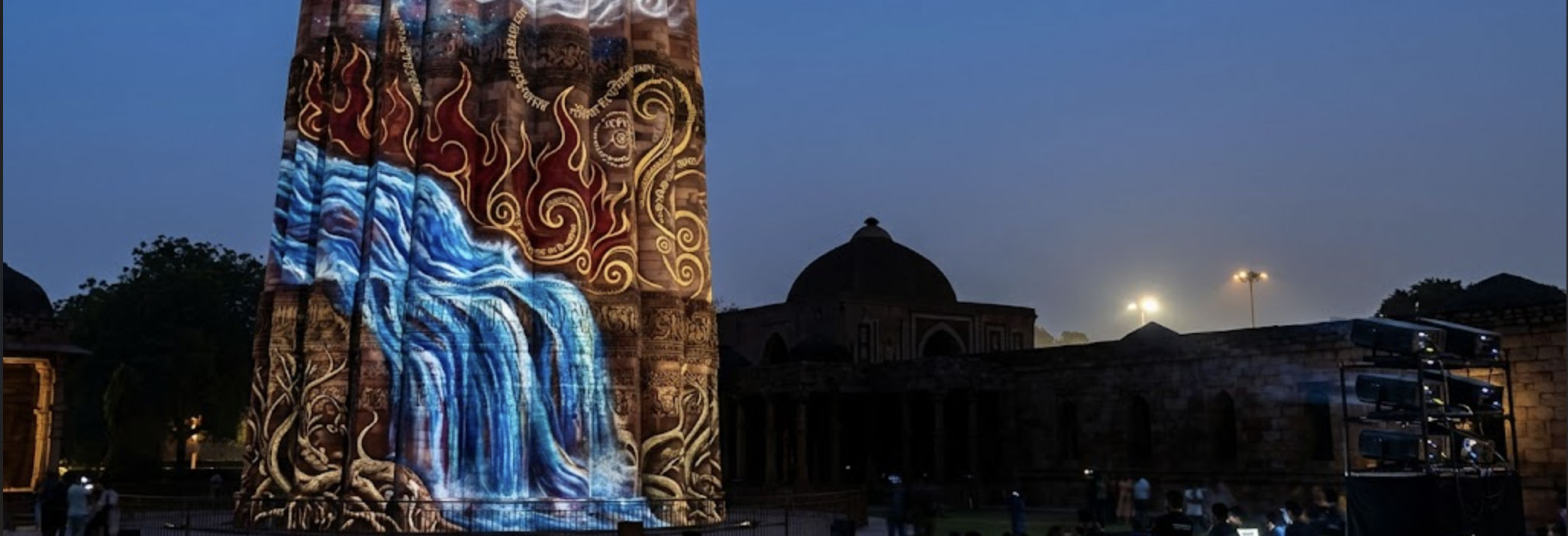
Projection mapping has revolutionised live events, brand activations, concerts, retail experiences, weddings, and architectural showcases by transforming ordinary surfaces into immersive visual spectacles. However, despite its growing popularity, many projection mapping projects fail to achieve their full impact due to avoidable mistakes in planning, execution, and technical setup.
At 3D Mapping India, we have delivered high-impact projection mapping experiences across industries, and we understand that successful execution requires much more than simply projecting visuals onto a surface.
In this blog, we explore the most common projection mapping mistakes and how to avoid them to ensure a flawless and engaging visual experience.
Projection mapping combines creativity, technology, architecture, animation, and environmental conditions. Even small oversights can affect:
Avoiding these mistakes can save time, budget, and production challenges while delivering a truly immersive experience.
One of the biggest mistakes in projection mapping projects is failing to properly analyse the projection surface before content creation.
Projection mapping is highly dependent on:
Uneven or reflective surfaces can distort visuals and reduce projection clarity.
How to Avoid It
Always conduct a detailed site survey and surface mapping before designing content. High-precision measurements and 3D modelling ensure accurate alignment and realistic visual effects.
Brightness is critical in projection mapping, especially for outdoor events and large-scale architectural projections.
Low-lumen projectors can result in:
Ambient lighting from streets, malls, stages, or nearby installations can further affect visibility.
How to Avoid It
Choose projectors based on:
Professional projection mapping companies calculate lumen requirements carefully to ensure optimal visibility.
Projection mapping content should be designed specifically for the projection surface. Repurposing standard videos or screen-based graphics often leads to poor results.
Common issues include:
How to Avoid It
Create custom-designed content tailored to the architecture or object being mapped. Strong storytelling, motion design, and perspective-based animation create immersive experiences that engage audiences effectively.
Many projection mapping failures occur because teams underestimate the importance of testing and rehearsals.
Without proper rehearsals, projects may face:
How to Avoid It
Schedule full technical rehearsals before the event. Test:
A well-rehearsed setup minimises risks during live execution.
Outdoor projection mapping projects are heavily influenced by environmental factors such as:
Ignoring these elements can affect equipment safety and projection quality.
How to Avoid It
Use weather-protected equipment and plan backup solutions for outdoor events. Conduct site inspections at the same time of day as the actual event to assess lighting conditions accurately.
Incorrect projector placement can create shadows, distortion, and uneven brightness across the projection surface.
This becomes especially problematic in:
How to Avoid It
Carefully calculate projector angles, lens selection, and throw distances during pre-production planning. Multi-projector edge blending may also be required for large surfaces.
A technically perfect projection can still fail if the audience cannot experience it comfortably.
Common mistakes include:
How to Avoid It
Design the experience from the audience’s perspective. Consider viewing distance, crowd movement, focal points, and emotional engagement throughout the show.
Projection mapping events rely heavily on technology, making backup systems essential.
Without contingency planning, technical failures can interrupt the entire experience.
How to Avoid It
Always have:
Professional event planning includes multiple layers of technical redundancy.
High-resolution projection mapping content requires significant rendering time and setup precision.
Rushed timelines can result in:
How to Avoid It
Allocate sufficient time for:
Projection mapping projects require detailed coordination between creative and technical teams.
Projection mapping is a specialised field that combines animation, projection engineering, media servers, lighting, architecture, and live event execution.
Choosing inexperienced vendors often leads to:
How to Avoid It
Work with experienced professionals who understand both the creative and technical aspects of projection mapping.
At 3D Mapping India, we deliver technically precise and visually stunning projection mapping experiences for:
Our team handles:
We ensure every project delivers maximum visual impact with flawless execution.
Projection mapping can create extraordinary experiences when executed correctly. However, overlooking technical planning, environmental conditions, content customisation, or audience experience can significantly reduce the effectiveness of a project.
By avoiding these common projection mapping mistakes, brands and event organisers can create immersive experiences that captivate audiences, increase engagement, and leave lasting impressions.
Looking to execute a high-impact projection mapping project without technical compromises?
Contact 3D Mapping India today to bring your vision to life with industry-leading projection mapping solutions.


