
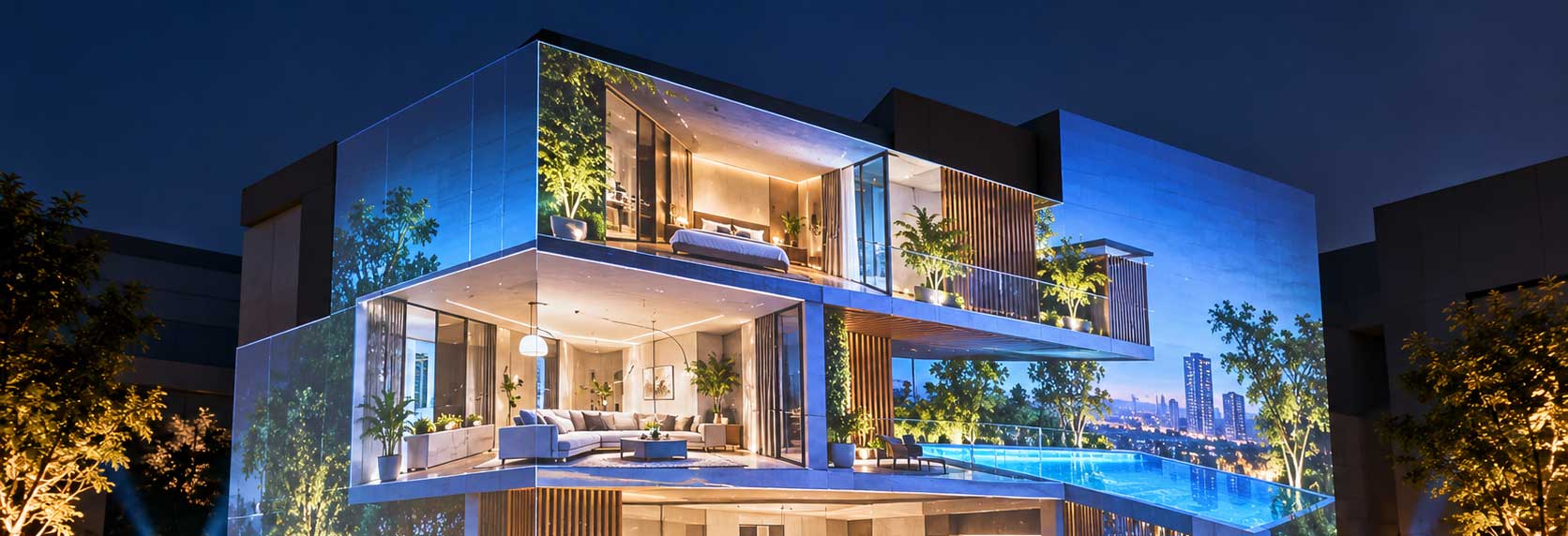
The real estate industry is becoming increasingly experience-driven. Buyers today expect more than brochures, floor plans and static architectural models when exploring a property. Developers and real estate brands are looking for innovative ways to communicate the scale, design, amenities and lifestyle associated with their projects.
This is where 3D projection mapping for real estate can make a significant difference.
By combining high-resolution visuals, architectural surfaces, animation, lighting and storytelling, projection mapping can transform a property presentation into an immersive visual experience. Instead of simply showing buyers what a development looks like, it can help them visualise how the space will look, feel and function.
3D projection mapping is a visual technology that uses specialised projectors to display digitally created content on physical surfaces such as buildings, architectural models, walls and structures.
For real estate, this technology can be used to project:
The physical structure becomes part of the visual presentation, creating an experience that is more dynamic than conventional property marketing.
Real estate marketing has traditionally relied on brochures, sample apartments, scale models, videos and digital presentations. While these remain useful, they may not always communicate the complete vision of a large development.
A property development can include multiple towers, landscaped areas, clubhouses, swimming pools, retail spaces, recreational facilities and extensive infrastructure. Explaining all of these elements through static material can be challenging.
Immersive real estate experiences allow developers to bring these concepts together into one engaging presentation.
For example, a projection mapping presentation can begin with the existing architectural model and gradually introduce the master plan, individual buildings, amenities, landscaping and surrounding infrastructure through animation.
This creates a visual narrative that allows prospective buyers to understand the project more intuitively.
A property launch is an opportunity to create a strong first impression.
Instead of presenting a conventional slideshow, developers can use 3D projection mapping for property launches to reveal the project through animation and visual storytelling.
The presentation can showcase the transformation from an empty site into a completed development, introducing different elements of the project one by one.
This approach can make project launches more memorable while creating a visually engaging experience for investors, buyers, partners and media.
Architectural models provide a physical representation of a project, but projection mapping can add another layer of information.
Visuals can highlight:
Different lighting and animation sequences can also demonstrate how the property may appear during different times of the day.
Floor plans can sometimes be difficult for buyers to interpret, particularly when they are viewing a large development with multiple configurations.
Projection mapping and animated visualisation can help demonstrate the relationship between rooms, entrances, balconies, common areas and amenities.
Developers can also use projected visuals to communicate interior design concepts, furniture layouts and lifestyle environments.
Amenities are a major part of modern real estate marketing.
A property may offer swimming pools, gyms, clubhouses, sports facilities, children’s play areas, landscaped gardens, co-working spaces and entertainment zones.
Rather than listing these facilities individually, an immersive presentation can visually take the audience through them.
This turns a list of amenities into a story-driven property experience.
Sales galleries are designed to help prospective buyers understand a development before construction is complete.
Adding projection mapping can make these spaces more interactive and engaging.
A large-scale projection can showcase the complete master plan, while smaller installations can explain specific towers, apartment configurations or amenities.
This creates an environment where visitors can explore the project through visuals rather than relying solely on printed material.
One of the biggest advantages of projection mapping is its ability to combine multiple forms of communication into a single experience.
A real estate presentation can use:
Visuals + Animation + Music + Narration + Lighting + Spatial Design
Together, these elements can create a narrative around the property.
For example, a presentation could start with the location and surrounding environment, move into the master plan, reveal individual buildings, introduce amenities and conclude with the lifestyle the development is designed to offer.
This storytelling approach can help audiences understand not just what the property contains, but what living or working there could feel like.
Traditional property presentations typically depend on brochures, photographs, videos, scale models and digital screens.
These formats remain valuable, but immersive projection offers an additional dimension.
| Traditional Presentation | 3D Projection Mapping |
| Static architectural models | Animated architectural visualisation |
| Printed floor plans | Dynamic spatial presentations |
| Standard property videos | Immersive storytelling |
| Individual amenity images | Connected visual journey |
| Limited physical interaction | Transformative visual experience |
| Primarily information-focused | Experience and storytelling-focused |
The goal is not necessarily to replace traditional marketing tools. Instead, projection mapping can complement them by creating a more engaging property presentation experience.
Large-scale real estate projects can be complicated to communicate.
A master-planned development may cover a substantial area and contain several residential towers, commercial spaces, roads, landscaped zones and amenities.
A physical model combined with projection mapping can provide a bird’s-eye view of the entire development.
Visual sequences can highlight individual zones, show connections between buildings and demonstrate how different components fit together.
This can be particularly useful for:
Projection mapping can also be combined with interactive technologies to create more personalised experiences.
For example, an interactive interface could allow visitors to select a particular tower or apartment configuration. The corresponding section of the architectural model could then be highlighted through projection.
Similarly, visitors could explore amenities, floor plans or different sections of a development based on their interests.
When combined with interactive touchscreen experiences, projection mapping can create a seamless journey between digital information and physical architecture.
This gives real estate brands greater flexibility when presenting complex projects.
The property buying journey often involves comparing multiple projects before making a decision. Creating a distinctive presentation can therefore help a development stand out.
Immersive visualisation can help developers:
For premium and large-scale developments, the experience itself can become part of the brand identity.
Successful projection mapping is not simply about projecting attractive visuals onto a building or model.
The content needs to be developed around the architecture, audience and communication objective.
A typical process includes:
The project team studies the architectural plans, scale model, development concept and key selling points.
The information is converted into a visual narrative with a clear beginning, progression and conclusion.
Architectural elements, animations, transitions and other visual assets are developed specifically for the projection surface.
The visuals are precisely aligned with the physical architecture using specialised projection mapping techniques.
Music, narration, sound effects and lighting can enhance the storytelling.
The projection is tested on-site to ensure accurate alignment, brightness, perspective and visual continuity.
The result is a carefully designed experience where the digital content interacts with the physical property model or architectural surface.
As real estate marketing becomes increasingly competitive, developers are looking beyond conventional advertising formats.
Technology such as 3D projection mapping, interactive touchscreens, immersive visualisation and experiential installations can help bridge the gap between architectural concepts and audience imagination.
For projects that are still under construction, these technologies can provide prospective buyers with a visual understanding of the final development long before they can physically experience it.
That makes immersive technology particularly valuable for property launches, sales galleries, investor presentations and major real estate events.
At 3D Mapping India, we create immersive property experiences that combine projection technology, architectural storytelling, animation and experiential design.
From property launches and architectural models to large-scale real estate presentations, projection mapping can transform the way a development is introduced to its audience.
Whether the objective is to showcase a new residential project, present a commercial development or create an engaging sales gallery, immersive projection can turn architectural information into an experience.
Looking to create an immersive property presentation? Explore 3D projection mapping solutions with 3D Mapping India and transform the way your real estate project is experienced. Get a free quote on immersive property experience.


