
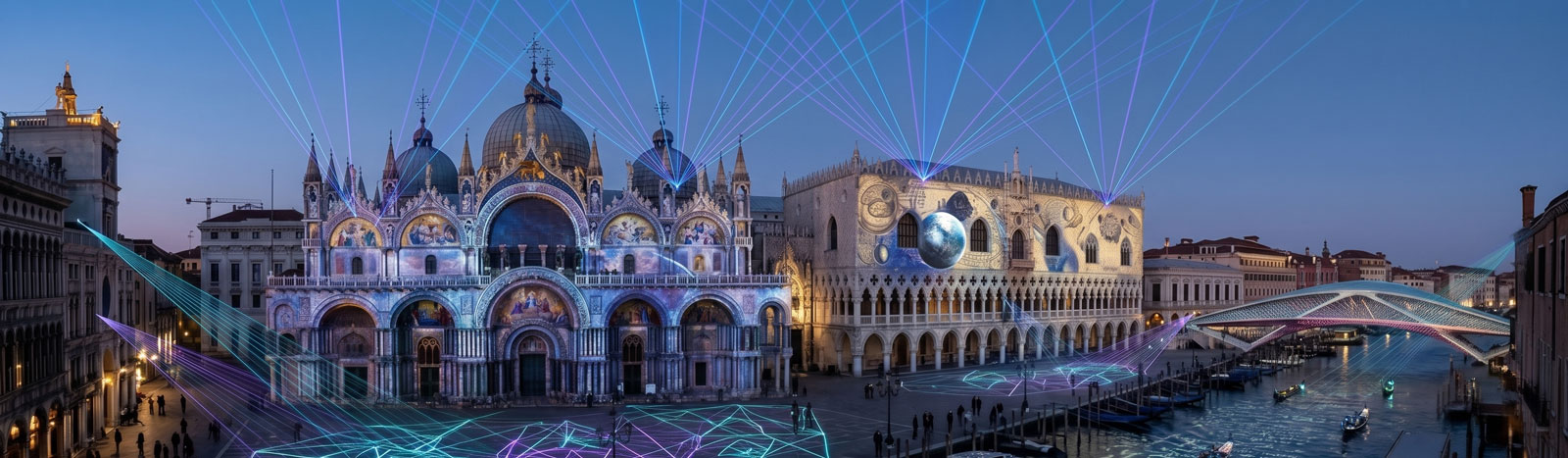
The expectations from live events have changed. Static visuals and pre-rendered content are no longer enough; today’s audiences expect environments that respond, adapt, and evolve in real time. This shift is being driven by one force: artificial intelligence.
For companies like 3D Mapping India, AI isn’t just an add-on, it’s becoming central to how immersive experiences are designed, executed, and optimised.
Traditionally, projection mapping relied heavily on pre-designed content. Every frame, transition, and animation had to be planned in advance. While visually impressive, it left little room for spontaneity.
AI changes that.
With machine learning and real-time data processing, projection mapping can now:
The result is a living, responsive visual experience, rather than a fixed show.
One of the biggest breakthroughs AI brings is real-time responsiveness.
Using sensors, cameras, and AI models:
For example, in a live concert or product launch, visuals can evolve based on how the audience reacts, creating a deeper emotional connection.
Content creation has traditionally been the most time-intensive part of projection mapping. AI is significantly accelerating this process.
AI tools now help:
This reduces turnaround time while maintaining high creative quality, especially critical for large-scale or last-minute projects.
Mapping projections onto complex surfaces, heritage buildings, uneven structures, or custom installations, requires extreme precision.
AI enhances this by:
This not only speeds up setup but also ensures pixel-perfect projection, even in challenging environments.
AI enables hyper-personalised experiences, even in large public events.
Imagine:
This level of personalisation was previously impossible at scale.
AI is not working in isolation, it’s amplifying other immersive technologies:
For a full-service experiential company like 3D Mapping India, this integration creates multi-layered, high-impact environments.
AI is also improving how live shows are managed behind the scenes.
With predictive analytics:
This leads to smoother execution and reduced risk during high-stakes events.
While AI might sound expensive, it actually helps optimise costs by:
Clients benefit from faster delivery, better quality, and more scalable solutions.
AI-powered projection mapping is not just about aesthetics, it’s about engagement, recall, and measurable impact.
Brands can now:
In a space where attention is the most valuable currency, AI-driven visuals offer a clear advantage.
The next phase of projection mapping will be defined by:
As these technologies evolve, the line between physical and digital experiences will continue to blur.
AI is not replacing creativity in projection mapping, it’s enhancing it. By enabling real-time adaptability, faster production, and deeper engagement, AI is redefining what’s possible in live shows.
At 3D Mapping India, this transformation is already underway, delivering smarter, more immersive, and highly responsive experiences for brands, events, and public installations.
If you’re looking to create next-generation immersive shows powered by AI, 3D Mapping India brings the expertise, technology, and creative vision to make it happen.


